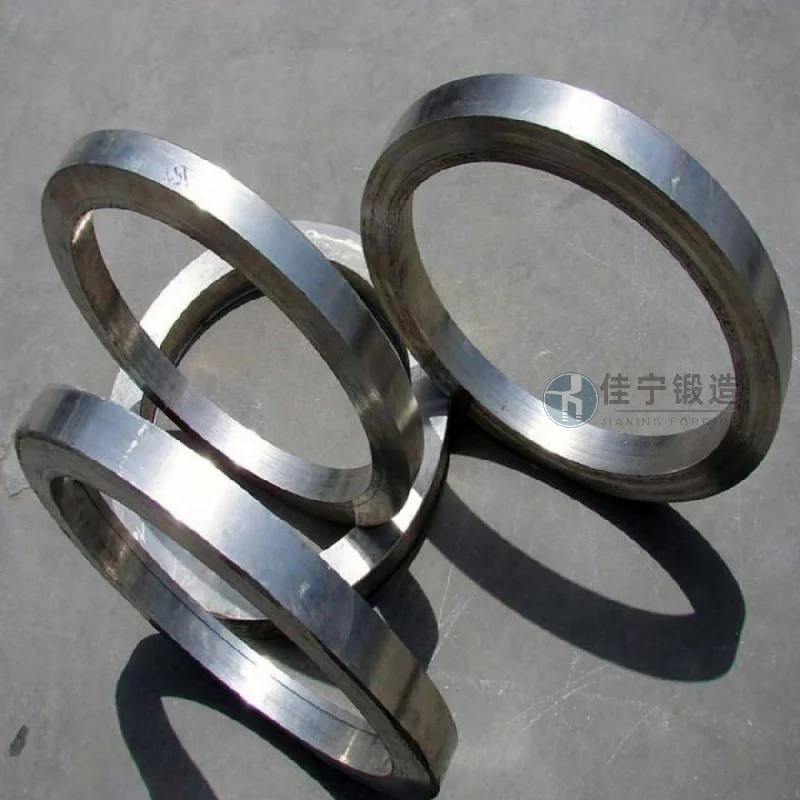
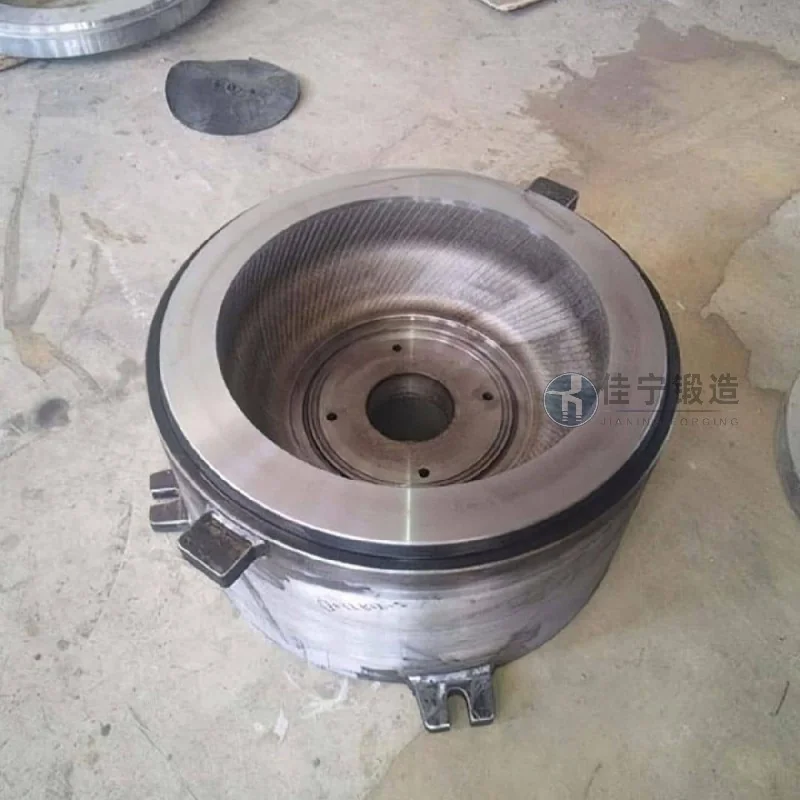
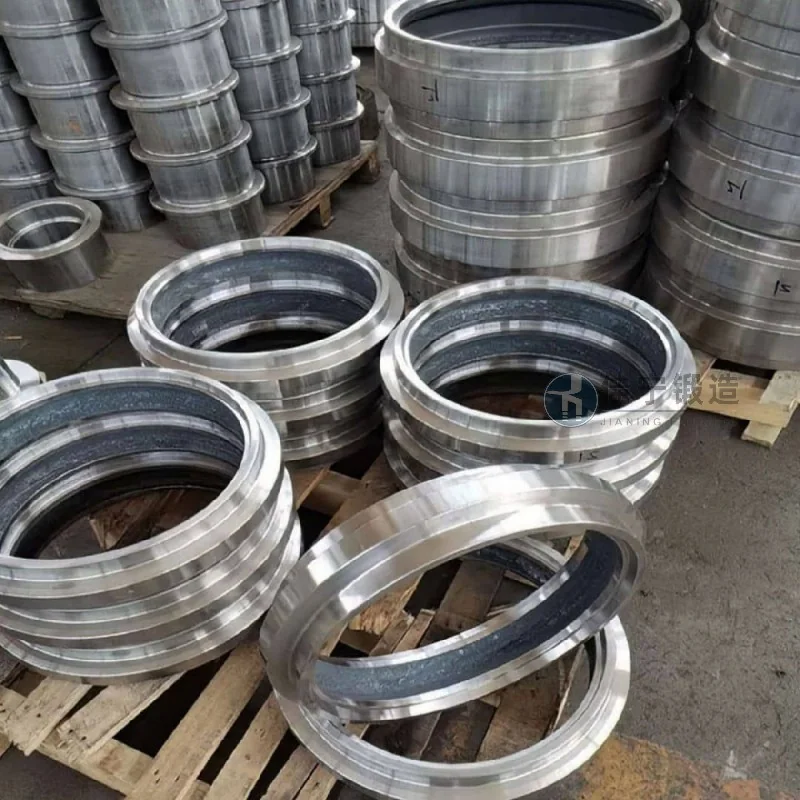
Shanxi Jianing Forging regularly stocks 20#, A105, 45#, and other standard carbon and high-quality carbon steel raw materials. The station has complete real-world cases of carbon steel flanges, shafts, and ring forgings. Carbon steel forgings offer high cost performance and are suitable for manufacturing general industrial equipment.
In the field of hydraulic equipment manufacturing, the quality of carbon steel forgings directly affects the stability of equipment operation and service life. A hydraulic equipment factory in Chengdu, Sichuan, encountered issues such as substandard carbon steel forgings and unstable delivery cycles during actual production, which affected the overall machine performance and production schedule. After extensive comparison and evaluation, the factory chose to cooperate with us and solved long-standing problems through customized forging solutions.
This case serves a hydraulic equipment factory in Chengdu, Sichuan. The factory mainly produces various core components such as hydraulic cylinders, hydraulic pumps, and hydraulic valves, with strict technical requirements for the strength, dimensional accuracy, and internal microstructure of carbon steel forgings. In the original procurement channels, the factory often experienced significant fluctuations in the mechanical properties of forgings, uneven machining allowances, and some batches had internal cracks, leading to lower finished product rates and higher after-sales maintenance costs.
This hydraulic equipment factory has long faced the following pain points: First, the tensile strength and yield strength of carbon steel forgings cannot stably meet design standards, and some forgings fail early during use; Second, the forging blank has large dimensional deviations, requiring additional machining adjustments and reducing production efficiency; Third, supplier delivery schedules are unstable, unable to align with manufacturers' production plans, leading to frequent production stoppages and material waiting; Fourth, the internal quality of the forging cannot be traced, making it difficult to pinpoint any quality issues once they occur. These issues directly affect the factory-quality of equipment and its market reputation.
To address the plant's pain points, we provided a comprehensive solution covering everything from material selection to forging processes, and then to inspection and delivery. In the material section, strictly following GB/T 699 and GB/T 3077 standards to procure high-quality carbon steel billets helps stabilize chemical composition. In the forging stage, multi-directional forging combined with a reasonable forging ratio effectively refines grains and eliminates internal loose defects, ensuring uniformity of forgings. In the heat treatment stage, hardness and plasticity are controlled through normalizing + tempering processes to meet the mechanical requirements of different hydraulic components. In terms of size control, through precise mold and process optimization, the allowance is kept within a reasonable range, reducing subsequent processing volume. At the same time, we have established a complete quality traceability system, with every forging traceable down to furnace number, forging team, and inspection records, helping customers have a clear understanding of every batch of products.
Through this cooperation, the first-pass pass rate of carbon steel forgings at the hydraulic equipment factory has improved, the dispersion of mechanical properties of forgings has decreased, and the stability of tensile and yield strength meets the customer's internal standards. The dimensional accuracy of forging blanks has improved, and subsequent machining time has been reduced by about 15% on average. In terms of delivery schedules, through optimized production schedules and inventory management, stable weekly deliveries are achieved, ensuring smooth coordination of customer production plans. Overall, the factory's equipment failure rate has decreased, and customer satisfaction has significantly improved.