Shanxi Jianing Forging can process large-diameter pressure vessel shell forgings made of carbon steel, stainless steel, and alloy steel. The station has a wealth of real-world cases of cylinder forging, fully demonstrating the forging capabilities of large-size cylinders and the corrosion-resistant results of finished products.
In the field of construction machinery, the performance of cylinder forgings, as key load-bearing components, directly affects the overall stability and service life of the equipment. A certain construction machinery factory (hereinafter referred to as the "Client") has long faced issues during mass production such as large dimensional deviations in the barrel forgings, insufficient internal microstructural density, and difficulties in controlling subsequent machining allowances, resulting in low assembly efficiency and fluctuations in finished product yield. There is an urgent need for a forging solution to improve product consistency and reliability.
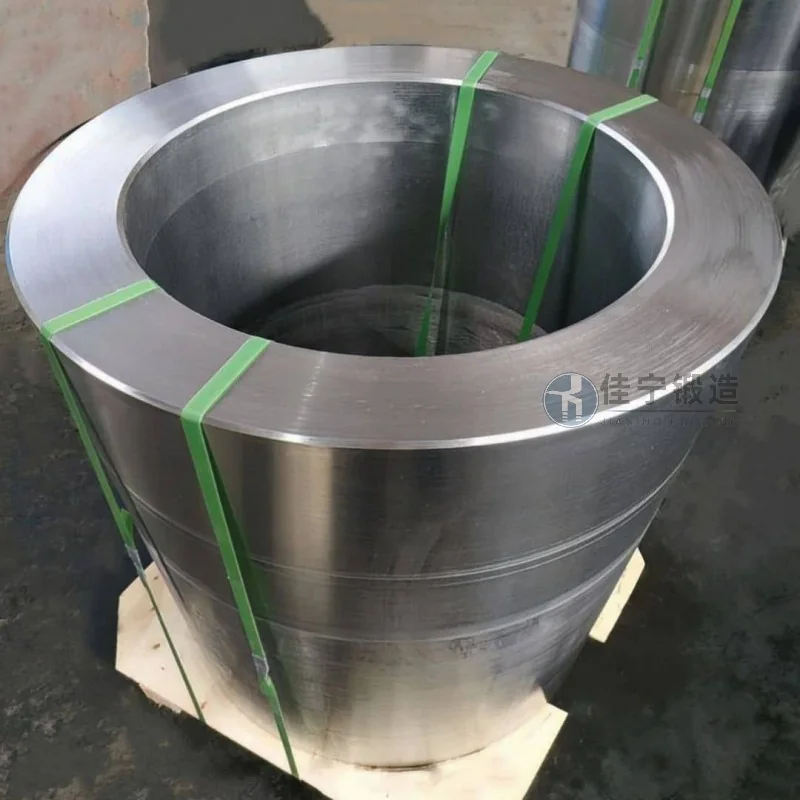
The customer's original barrel forging production process had multiple shortcomings: on one hand, insufficient precision in forging temperature and deformation control led to uneven grain size and significant differences in hardness distribution after heat treatment; On the other hand, rough mold design and wear management lead to excessive roundness and straightness of forgings, requiring more than 5 mm of machining allowance on one side, which not only increases material costs but also extends the machining cycle. In addition, conventional inspection methods are difficult to quickly screen internal defects, and some forgings show early fatigue cracking after assembly, which affects the reputation of customers' equipment.
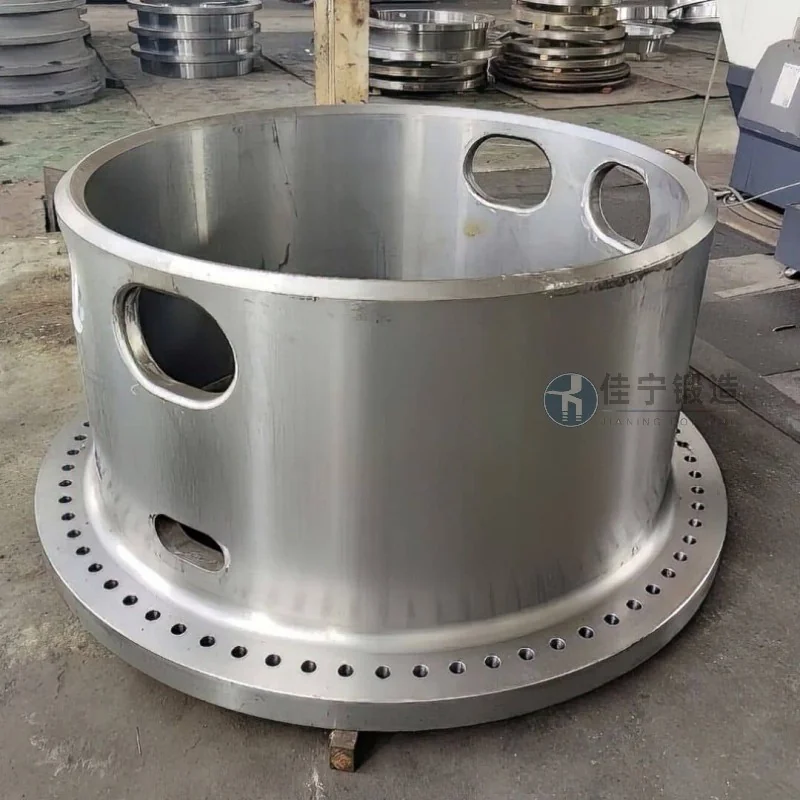
To address these pain points, Jianing Forging has customized full-process cylindrical forging solutions for customers. By adopting multi-directional forging technology, the billet heating curve and deformation path are optimized, allowing the metal flow lines to be continuously distributed along the circumference of the cylinder, thereby improving the isotropic properties of the forging. Combined with high-precision combined dies and an online dimensional monitoring system, the roundness tolerance of the cylinder forgings is controlled within 0.3 mm, with single-side machining allowance compressed to 2 mm, thereby reducing subsequent processing costs. At the same time, ultrasonic flaw detection and hardness sorting linkage processes have been introduced, helping each factory forging be free of internal defects such as cracks and porosity, with hardness fluctuation controlled within ±5 HB. After mass delivery, customers reported that the first-pass pass rate for products increased to over 98%, assembly efficiency improved by about 20%, and the equipment extended its trouble-free operation cycle.