Shanxi Jianing Forging provides customized processing of lightweight aluminum alloy forgings and aluminum flanges. The on-site aluminum alloy forging project cases are complete, with products that are lightweight and meet strength standards, compatible with new energy and lightweight equipment.
A transmission parts factory in Shunyi, Beijing, has long been engaged in the production of key components of mechanical transmission systems, with strict standards for the material properties, dimensional accuracy, and service life of core forgings. To meet the increasingly demanding market, the plant sought alloy steel forging suppliers with stable supply capabilities. Leveraging years of experience in alloy steel forging, Jianing Forging provides the plant with forging products that meet the requirements of its transmission components, helping to improve overall component reliability.
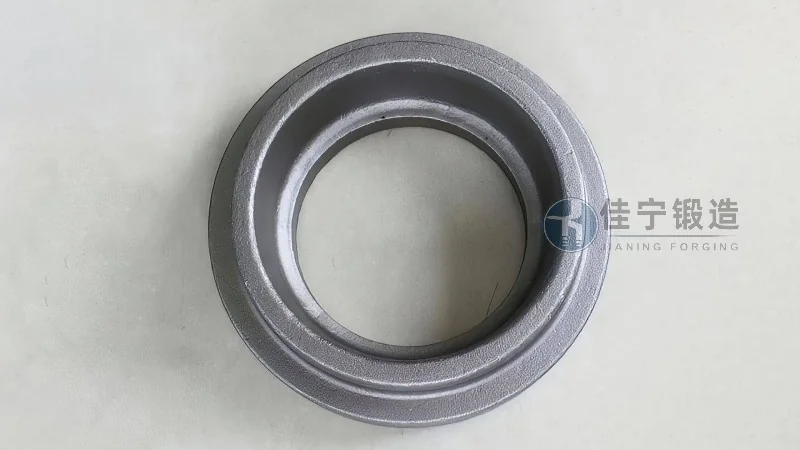
During production, the transmission parts factory found that the original forging suppliers exhibited fluctuations in material consistency, with some batches exhibiting uneven internal microstructure and substandard mechanical properties, resulting in a decline in finished product yield. At the same time, the delivery cycle of forgings is unstable, affecting the progress of vehicle assembly. Customers urgently need to shorten supply cycles while improving material quality, and to offer flexible size and shape customization for different transmission component specifications.
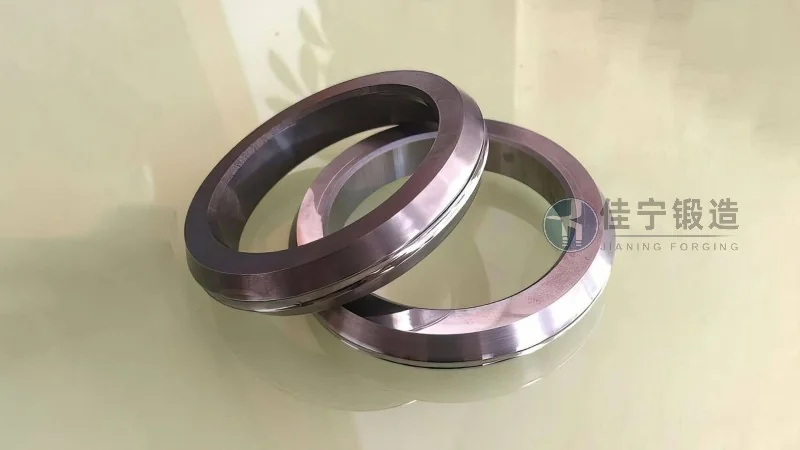
To address customer pain points, Jianing Forging approaches material selection, forging processes, and quality control. On the material side, we select alloy steel bars that meet national standards and conduct spectral analysis and chemical composition re-inspection upon entry, ensuring stable material composition in every batch. In the forging stage, a combination of multi-directional forging and temperature-controlled forging is used to refine grains, eliminate internal looseness, and increase the density of the forging. At the same time, by flexibly switching between die forging and free forging, we meet customers' molding needs for parts of varying complexity. For quality control, ultrasonic flaw detection and hardness testing are performed on every forging, along with detailed material reports. Additionally, by optimizing production scheduling, we have shortened routine delivery cycles by about 20%, effectively supporting customers' production cycles.