Shanxi Jianing Forging can process large-diameter pressure vessel shell forgings made of carbon steel, stainless steel, and alloy steel. The station has a wealth of real-world cases of cylinder forging, fully demonstrating the forging capabilities of large-size cylinders and the corrosion-resistant results of finished products.
In the field of wind power equipment manufacturing, bearing shell forgings, as key transmission components, directly affect the overall operational stability and service life of the entire machine. The tube forging solution provided by Caring Forging to a wind power bearing factory in Chengde, Hebei, effectively addressed industry challenges in process control and performance support, helping customers upgrade their products.
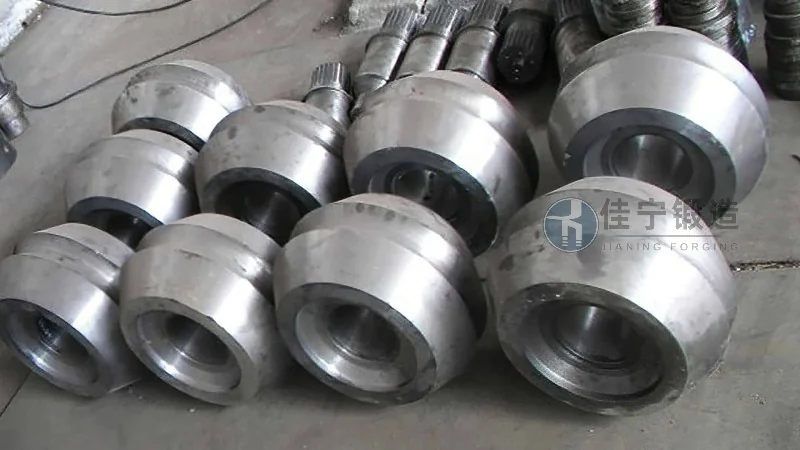
A wind power bearing factory in Chengde, Hebei, commissioned Jianing to forge and produce a batch of tube forgings for wind power spindle bearings. This batch of forgings must meet the high load-bearing and long service life requirements driven by the trend toward larger and lighter products, while also adapting to the customer's existing processing equipment and assembly processes.
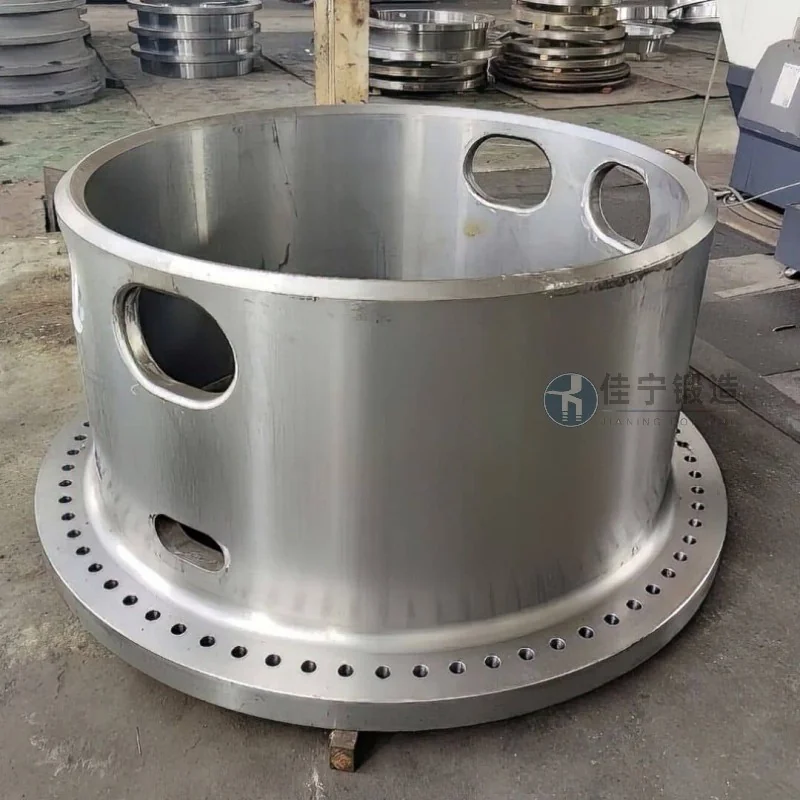
Customers face multiple challenges in actual production: First, traditional forging processes tend to cause internal structural defects such as looseness and segregation within forgings, affecting bearing operational reliability; Second, the forging has a large machining allowance, resulting in high machining costs and long cycles for subsequent machining; Third, the difficulty of controlling deformation during heat treatment of large cylinder forgings leads to a low yield; Fourth, the supply chain's response speed is insufficient, making it difficult to meet the rapid delivery demands of the wind power industry.
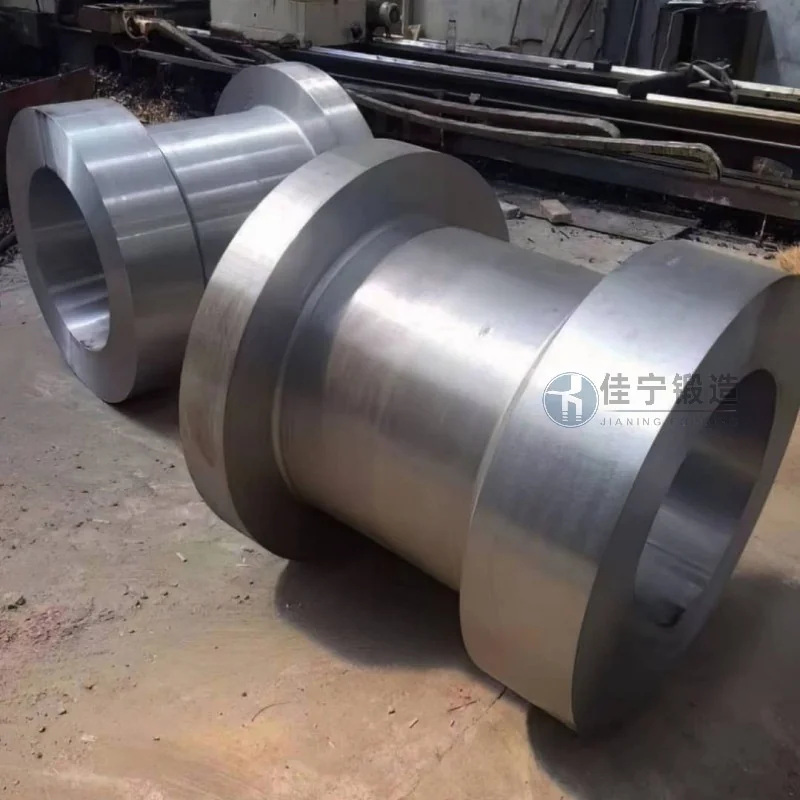
Jianing Forging addresses these pain points by providing a systematic solution: using multi-directional forging and temperature-controlled shaping processes to effectively refine grains, uniform microstructure, and reduce internal defects; By optimizing mold design and forging heat, the machining allowance for blanks is reduced by more than 15%, shortening the machining cycle; Apply segmented heat treatment and simulation pre-deformation technology to keep the deformation amount within the required drawings; At the same time, relying on flexible production scheduling, the entire process from material input to delivery is shortened by 20%, supporting customer project milestones. The final delivered barrel forgings were inspected by the customer, and all performance indicators met or exceeded technical agreement standards, with stable batch quality.