Shanxi Jianing Forging has gathered real-world cases of wind power flange rings, ring gears, bearing rings, roller rings, and other ring landings, with a complete range of finished forging products for carbon steel, stainless steel, and alloy rings, providing reference for product selection and non-standard solutions.
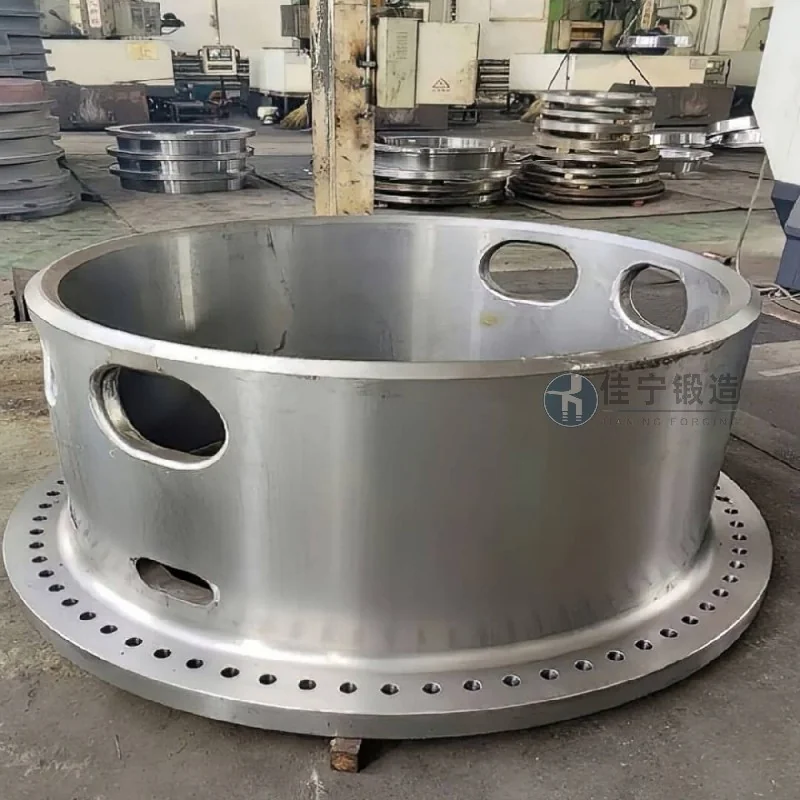
A metallurgical plant in Tangshan, Hebei, has long faced issues such as large machining allowances, low material utilization, and unstable product performance when producing large ring forgings. Traditional open-die forging processes result in longer machining times and difficulty meeting high-precision dimensional requirements, affecting overall production cycle time and finished product pass rates.
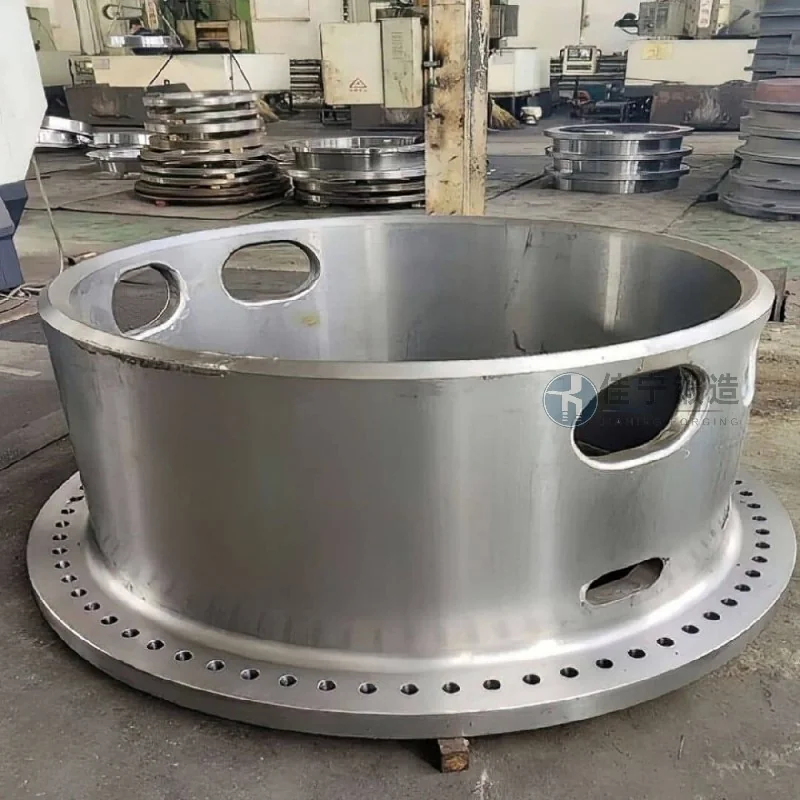
The main pain points of this metallurgical plant are concentrated in three areas:
1) The coaxiality deviation between the inner and outer diameters of the ring forgings is large, requiring repeated adjustments during assembly;
2) The post-forging microstructure is not dense enough, and local hardness unevenness is likely to occur after heat treatment;
3) Many forging fires and high energy consumption, resulting in consistently high production costs per piece. The customer urgently needed a forging solution that could improve precision, reduce margins, and lower overall costs.
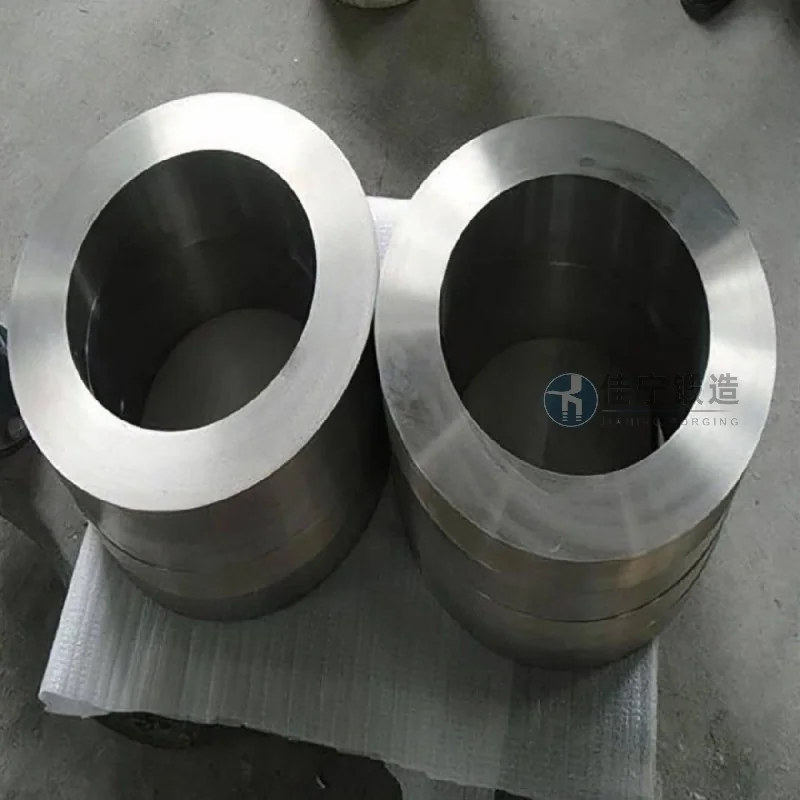
To address these pain points, Jianing Forging has designed a dedicated ring forging forming solution for customers, adopting temperature-controlled forging + fine ring grinding process, achieving breakthroughs in the following areas:
• Dimensional accuracy: Through a closed-loop rolling ring control system, the inner and outer diameter tolerances are kept within ±1.5mm, reducing subsequent turning volume.
• Microstructure: Optimized heating and deformation process parameters to achieve forging grain size above grade 6, improving uniformity and narrowing hardness fluctuation range after heat treatment.
• Production efficiency: The single-piece forging cycle has been reduced from the traditional 3~4 heats to 1~2 heats, reducing overall energy consumption by about 20% and shortening delivery cycles.
• Material utilization: Using near-net forming technology, material utilization is increased from the conventional 65% to over 82%, effectively reducing raw material costs.
Currently, this solution has been mass-applied on customer production lines. Testing shows that all mechanical indicators of the ring forgings meet metallurgical equipment standards. Customers report good product consistency, stable machining allowances, and significant improvements in subsequent machining efficiency. Jianing Forging will continue to monitor usage to provide more reliable customized forging services for ring parts in the metallurgical industry.