Shanxi Jianing Forging has gathered real-world cases of wind power flange rings, ring gears, bearing rings, roller rings, and other ring landings, with a complete range of finished forging products for carbon steel, stainless steel, and alloy rings, providing reference for product selection and non-standard solutions.
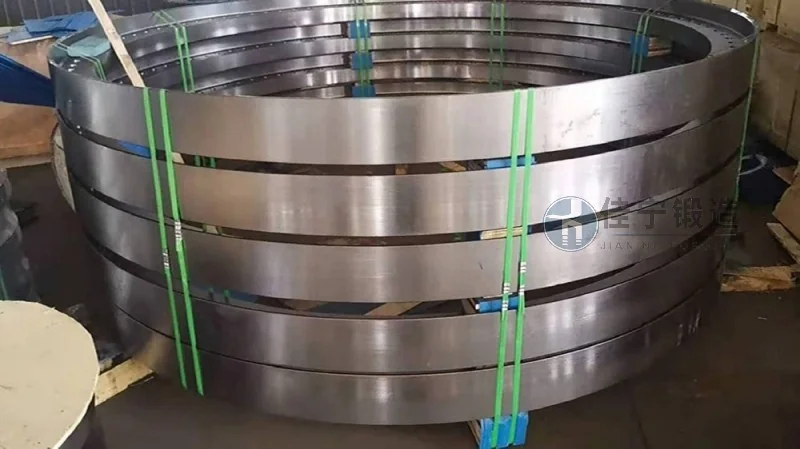
A petrochemical equipment factory in Daqing, Heilongjiang, has long faced challenges such as low processing efficiency and insufficient material utilization when producing large ring forgings. The ring-shaped forgings required by this equipment factory are mainly used for key pressure-bearing components in petrochemical units, with high requirements for dimensional accuracy and internal microstructural density. The original process had issues such as repeated heating and repeated forging, resulting in long production cycles, high energy consumption, and unstable product consistency.
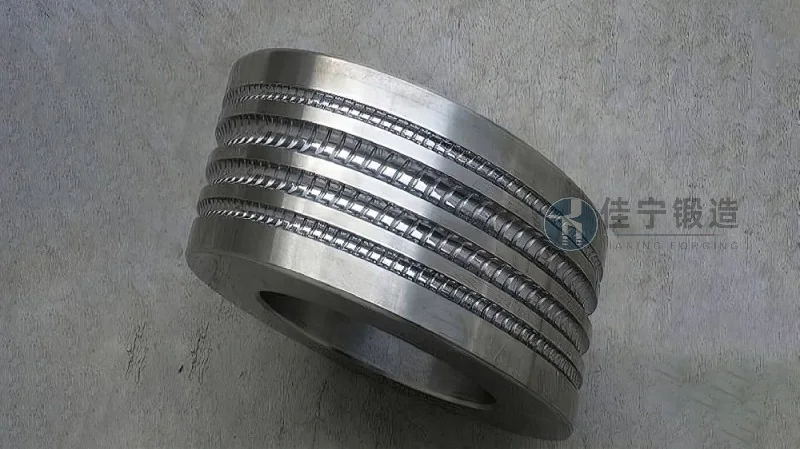
This customer encountered three main issues in ring forging processing: 1. Traditional forging requires multiple rounds of heating and repeated forming, which not only extends delivery cycles but also increases raw material waste; Second, some forgings exhibit uneven microstructure after subsequent heat treatment, affecting product service life; Third, due to the lack of dedicated molding tooling, the mold change times for rings of different specifications are lengthy, making it difficult to meet the production needs of small batches of multiple varieties. These issues directly restrict customers' market response speed and cost control capabilities.
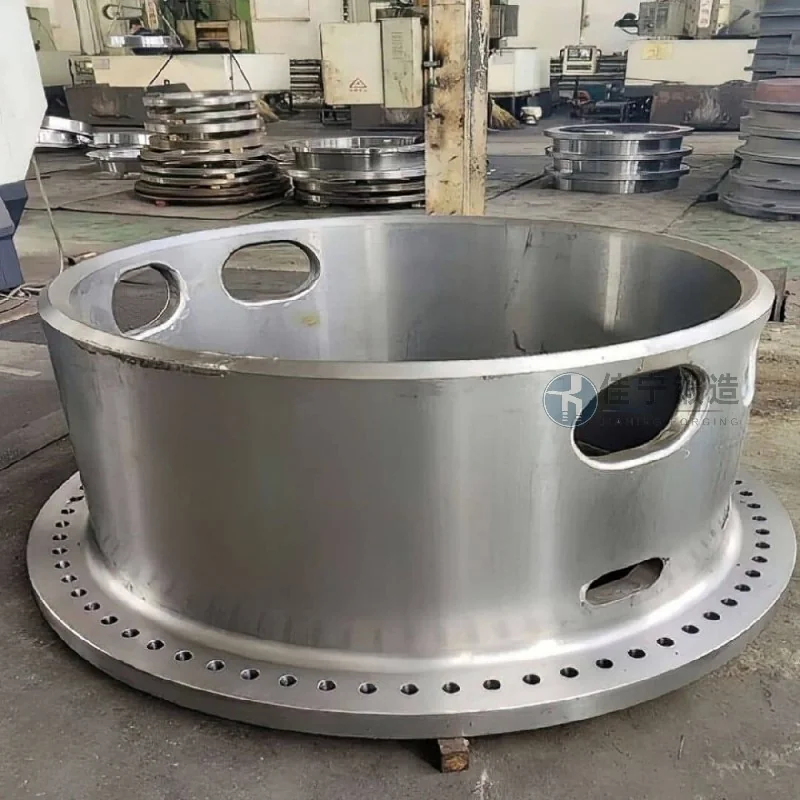
Jianing Forging provides customized overall ring forging solutions tailored to customers' specific pain points. We use a closed-die forging and ring composite process, completing pre-forging and final forging in a single heating, which reduces the number of fires and material waste. Combined with independently developed special-shaped ring rolling dies, rapid switching between different specifications of ring parts is achieved, reducing mold change time by about 60%. At the same time, by optimizing the forging temperature range and deformation control, the internal structure of the forging becomes more uniform, and its mechanical properties meet API 6A and other standards. The final delivered ring forgings met customer expectations in dimensional accuracy, surface quality, and internal density, helping the equipment plant improve production line efficiency and reduce overall manufacturing costs.