Shanxi Jianing Forging has gathered real-world cases of wind power flange rings, ring gears, bearing rings, roller rings, and other ring landings, with a complete range of finished forging products for carbon steel, stainless steel, and alloy rings, providing reference for product selection and non-standard solutions.
In the field of construction machinery, the quality of annular forgings, as key components, directly affects the stability and service life of equipment. A construction machinery factory in Tianshui, Gansu, has long faced issues such as fatigue cracks, dimensional deviations, and uneven heat treatment in ring forgings under heavy load conditions, which have significantly impacted production efficiency and equipment safety. To systematically address these issues, after extensive comparisons, the factory ultimately chose to cooperate with Jianing Forging, leveraging its mature forging processes and strict quality control system to complete a batch of customized production of high-demand ring forgings.
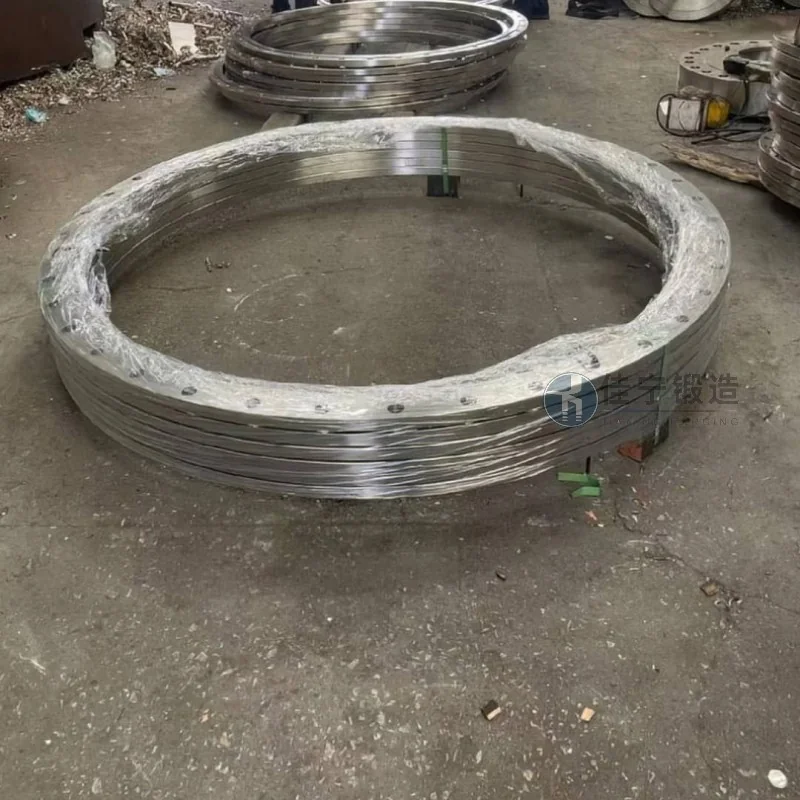
This case involves the supporting ring forgings required by a construction machinery factory in Tianshui, Gansu, used for the rotational support structure of its large construction machinery. This forging must withstand frequent impact loads and alternating stresses, demanding high standards for internal material tightness, dimensional accuracy, and surface hardness. By optimizing forging ratios, refining grain size, and combining customized heat treatment processes, Jianing Forging successfully delivered ring-shaped forgings that met the technical agreement requirements, helping customers improve overall machine reliability.
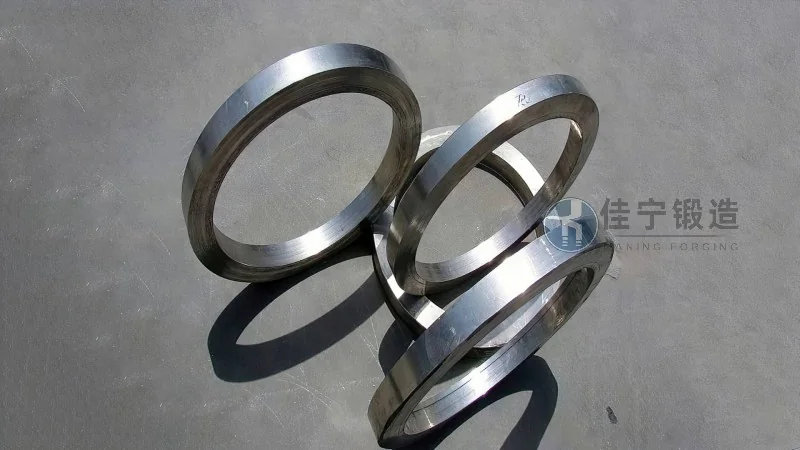
1. Risk of fatigue failure: Under long-term heavy load conditions, the customer's original annular forgings have uneven internal metal flow distribution, which easily leads to microcracks in stress concentration zones and leads to early failure.
2. Insufficient dimensional consistency: Multiple batches of forgings fluctuate significantly in key dimensions such as inner and outer diameters and end face parallelism, leading to increased machining allowance and higher costs.
3. Uneven heat treatment hardness: Due to significant differences in forging wall thickness, conventional heat treatment processes make it difficult to achieve uniform hardness across the entire cross-section, and some areas do not meet wear resistance standards.
4. Tight delivery cycles: The company's production schedule is tight, with strict deadlines for forging blank delivery, requiring suppliers to have rapid response and stable production scheduling capabilities.
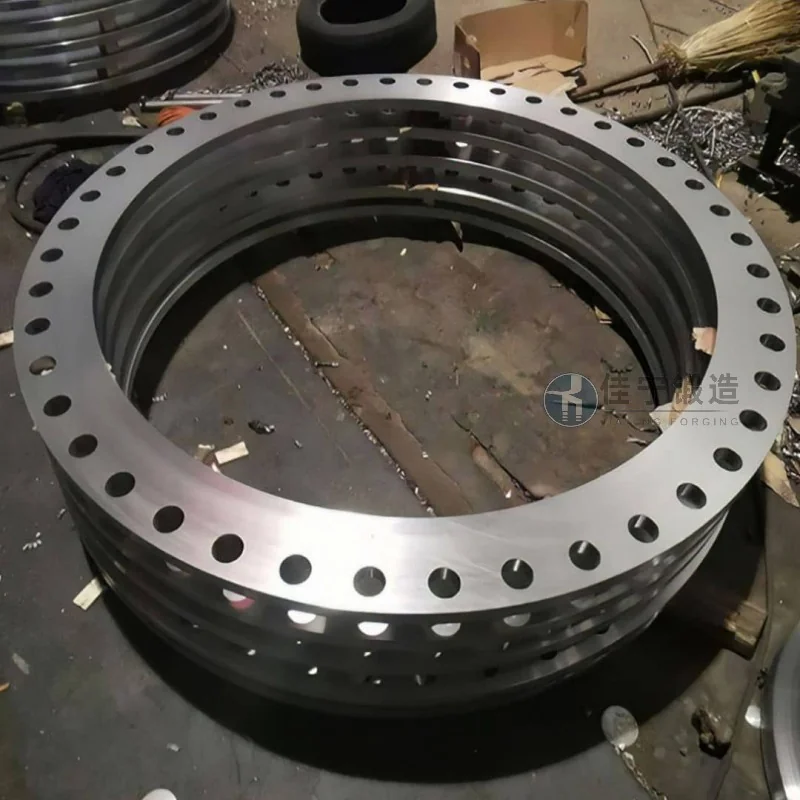
To address these pain points, Jianing Forging offers the following systematic solutions:
1. Optimized forging process: By adopting multi-directional forging technology, metal streamlines are reasonably distributed along the forging contour, improving fatigue resistance and reducing the probability of early failure.
2. Fine molds and process control: Using high-precision ring molds combined with pre-forging, mid-forging, and post-forging stage of online dimensional monitoring, helps control individual piece dimensional tolerances within ISO IT7 level and reduces subsequent machining allowances.
3. Customized heat treatment plan: Based on forging wall thickness and material characteristics, design a process combination of segmented temperature control, quenching medium selection, and tempering time matching to control full-section hardness fluctuations within HRC 2.
4. Flexible production scheduling: Establishing a rapid flow mechanism from material preparation to forging to heat treatment to inspection, enabling delivery of blanks for urgent orders within 48 hours to meet customers' urgent schedule requirements.