Shanxi Jianing Forging has gathered real-world cases of wind power flange rings, ring gears, bearing rings, roller rings, and other ring landings, with a complete range of finished forging products for carbon steel, stainless steel, and alloy rings, providing reference for product selection and non-standard solutions.
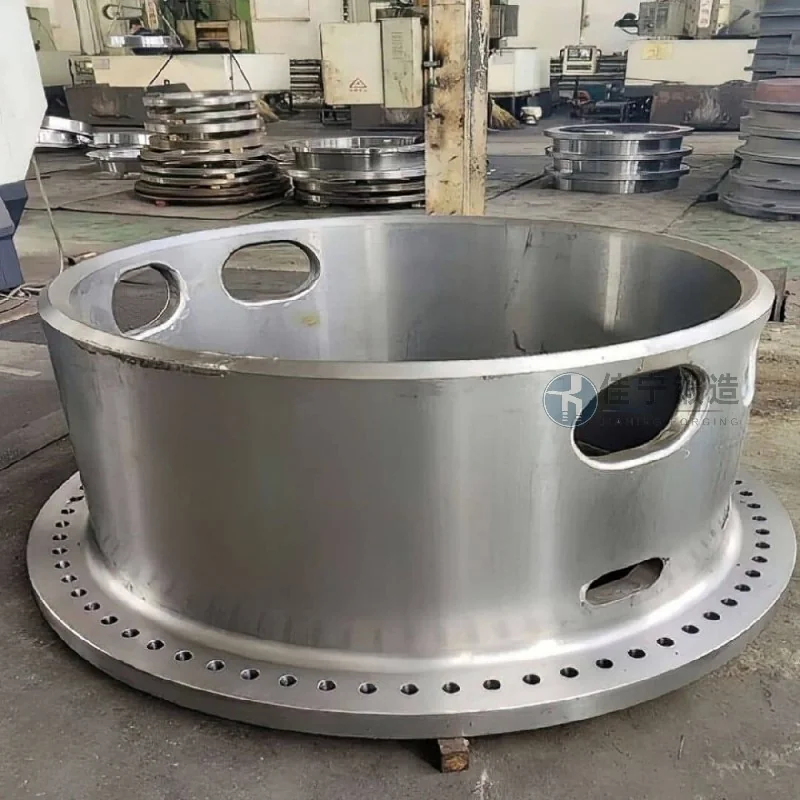
A mining equipment factory in Qujing, Yunnan, has long been engaged in the manufacturing and maintenance of large crushers, vibrating screens, and other equipment. Its key structural component—the ring forging—must withstand high-frequency impacts and heavy-duty conditions. Due to the harsh mining environment, the factory's previously used traditional castings frequently cracked and deformed during use, seriously affecting equipment operation stability and maintenance cycles. After extensive investigation, the factory chose to cooperate with our company (Jianing Forging) to develop customized ring forgings based on the characteristics of their equipment.
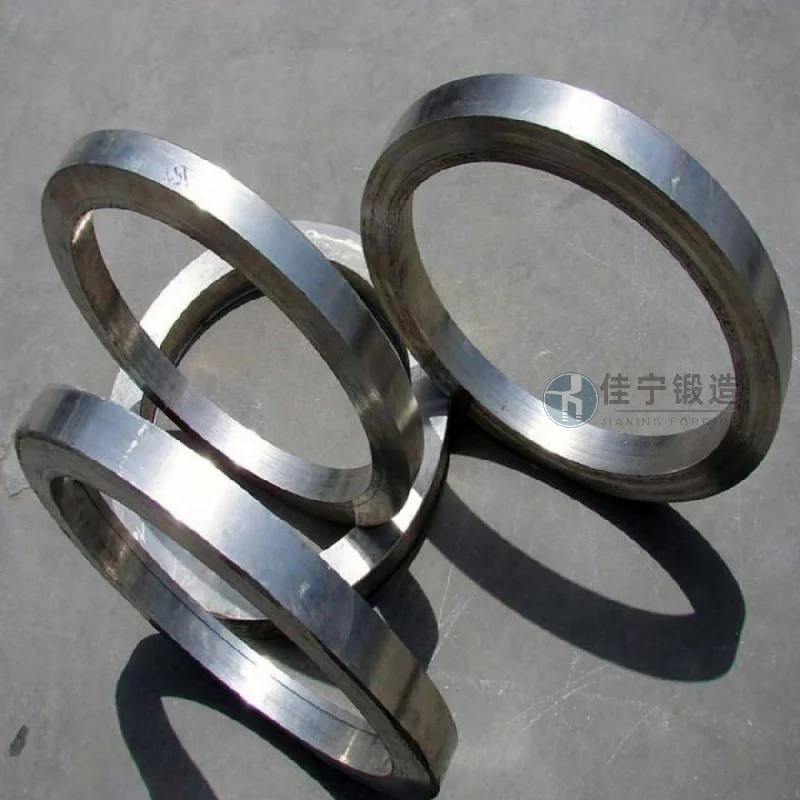
The main challenges faced by the mining equipment factory include:
1. During service, annular forgings must simultaneously withstand high axial pressure and radial shear stress. Traditional castings suffer from internal tissue looseness and segregation defects, resulting in insufficient fatigue life and requiring replacement every 3 to 6 months;
2. Temperature fluctuations at the mine site are large and often accompanied by dust and moisture erosion, placing higher demands on the corrosion resistance and wear resistance of forgings;
3. Large dimensional tolerances of original parts, requiring on-site grinding during installation, which leads to extended downtime and high maintenance costs.
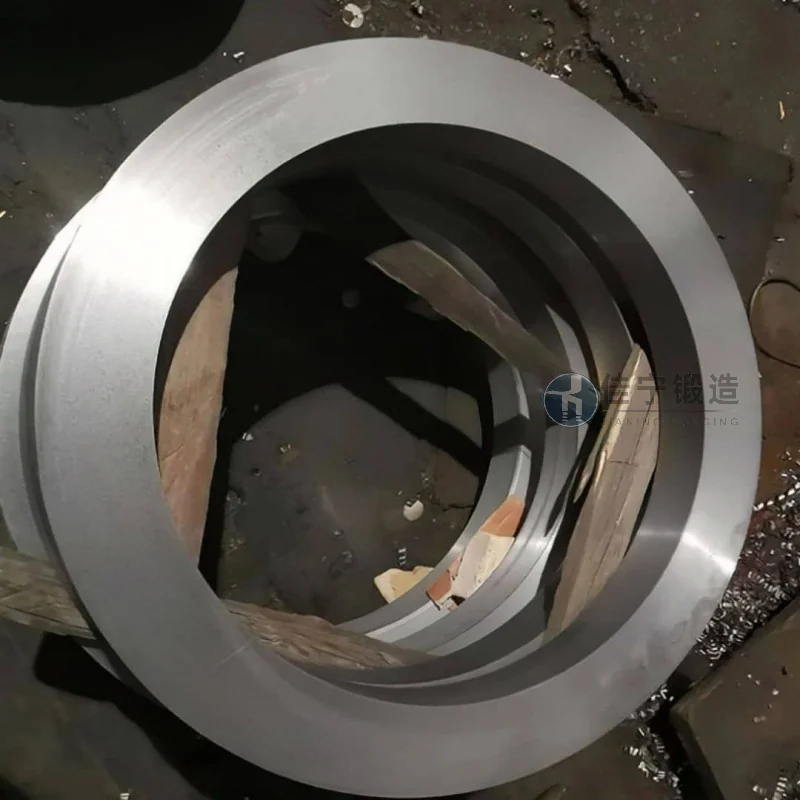
To address these pain points, Jianing Forging provides systematic solutions from three aspects: material selection, forging process, and post-processing:
1. Material optimization: Using vacuum-degassed alloy structural steels (such as 42CrMo, 35CrMo, etc.) enhances strength while improving low-temperature impact toughness, reducing segregation and inclusions at the source;
2. Forging process: Uses dedicated ring rolling equipment for ring parts, combined with multi-heat temperature-controlled forging, allowing metal flow lines to be continuously distributed along the circumference and avoiding casting defects; Subsequently, normalizing + quenching and tempering heat treatment is used to evenly control hardness between 280~320 HBW, balancing wear resistance and machinability;
3. Precision support: After rough machining, a margin is reserved, and after finishing turning and ultrasonic flaw detection, the finished product's roundness error is ≤0.5 mm, and the outer diameter tolerance can reach IT7 grade, enabling direct assembly without repairs and significantly shortening downtime.
After delivery, this batch of ring forgings has been continuously operating at the user's site for over 18 months, with no cracks, deformation, or other failures. Maintenance frequency has been reduced by 75%, and overall operating costs have significantly decreased, earning high recognition from the equipment factory's technical team.