Shanxi Jianing Forging provides customized processing of lightweight aluminum alloy forgings and aluminum flanges. The on-site aluminum alloy forging project cases are complete, with products that are lightweight and meet strength standards, compatible with new energy and lightweight equipment.
A heavy machinery factory in Xuzhou, Jiangsu (hereinafter referred to as the factory) has long focused on the production and manufacturing of large construction machinery components, with core components that have strict requirements for the strength, wear resistance, and service life of alloy steel forgings. In practical applications, forgings supplied by a factory's original supplier developed fatigue cracks and early failure under long-term high-load conditions, causing frequent equipment shutdowns for maintenance, significantly increasing operating costs, and also affecting overall production efficiency.
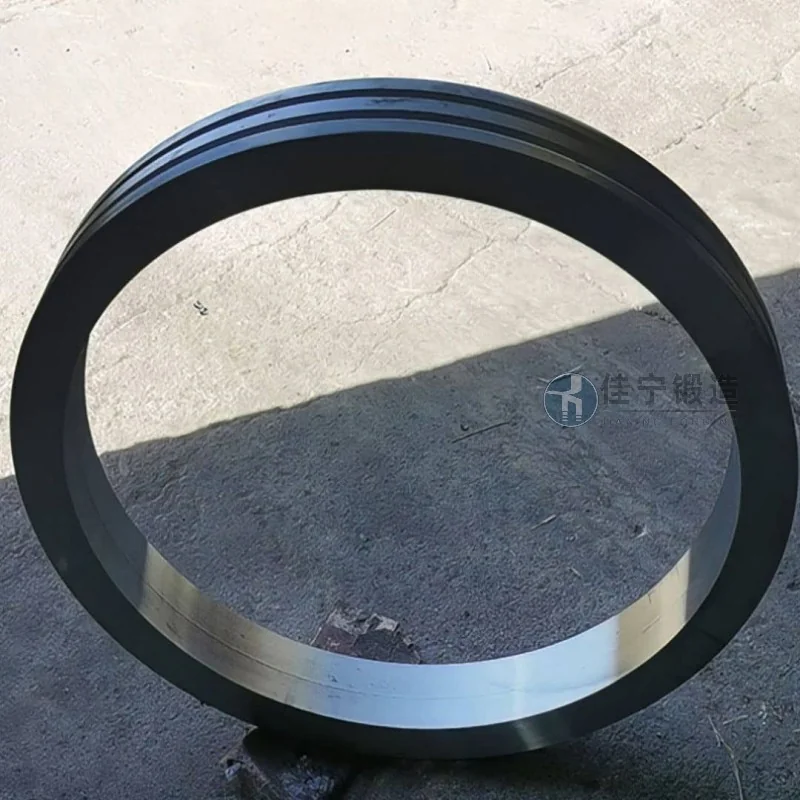
A certain factory faced the following prominent issues during production: First, the forgings had insufficient fatigue resistance under continuous alternating stress, and their service life was far below design expectations; Second, the internal structural uniformity of the material is not ideal, with some areas exhibiting performance fluctuations after processing and a low pass rate; Furthermore, suppliers have long delivery cycles, making it difficult to meet the rapid production scheduling needs of certain factories; Finally, the lack of targeted technical support prevents effective material and process optimization recommendations when encountering complex working conditions.
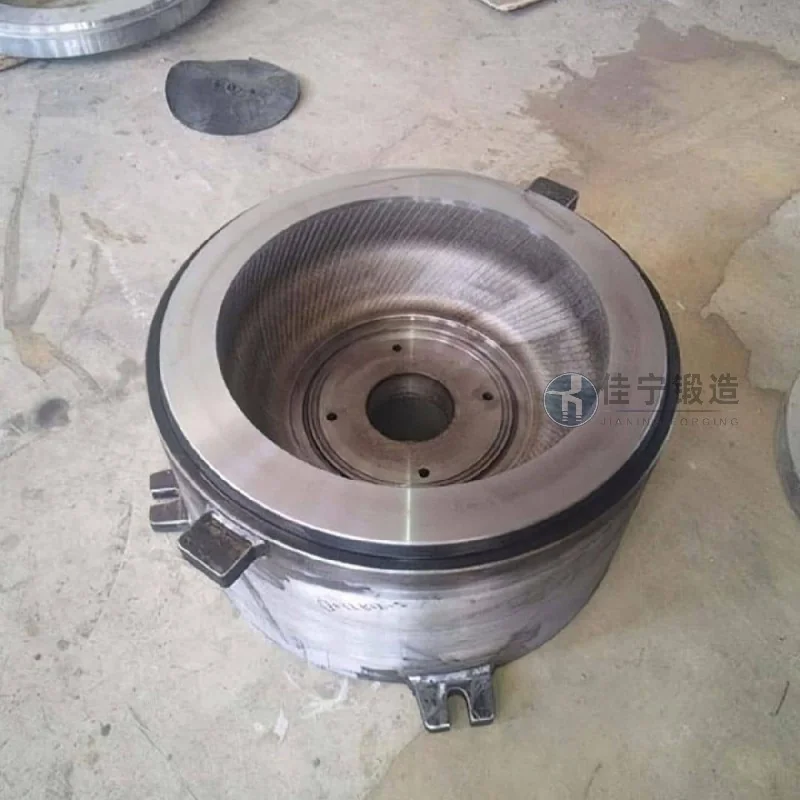
To address these pain points, Jianing Forging provided a systematic solution for a certain factory. In terms of materials, by optimizing alloy compositions (such as using mature grades like 42CrMo and 40CrNiMo), the tensile strength and toughness of forgings are improved while keeping costs under the premise of cost control. At the process level, multi-directional forging technology is adopted, combined with a more precise temperature-controlled heating regime and multi-heat forging, effectively refining grains and eliminating microstructural defects, resulting in consistent bidirectional properties of forgings. At the same time, a full-process quality inspection system has been introduced—from raw material incoming spectral analysis, to thermal control records during forging, to ultrasonic flaw detection, magnetic particle testing, and mechanical property testing at the finished product stage, ensuring that every product meets the operating conditions of a particular factory. In addition, Caring Forging offers one-stop services from mold design and forging blanks to machining allowance, and dispatches on-site technicians to assist with debugging, significantly shortening the prototype trial production cycle and helping a certain factory achieve stable mass production.