Shanxi Jianing Forging has gathered real-world cases of wind power flange rings, ring gears, bearing rings, roller rings, and other ring landings, with a complete range of finished forging products for carbon steel, stainless steel, and alloy rings, providing reference for product selection and non-standard solutions.
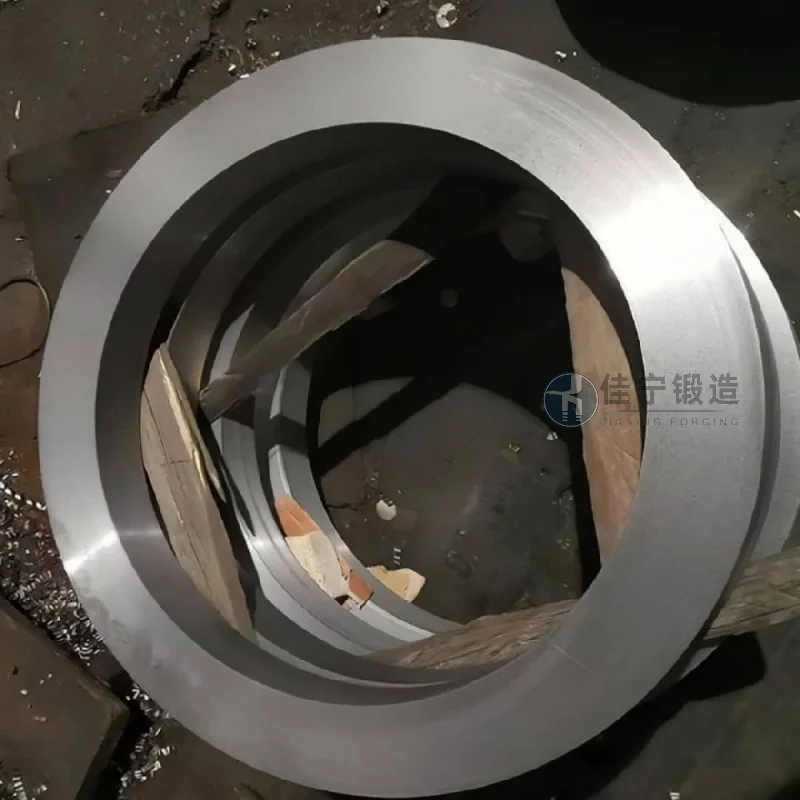
A construction machinery factory in Yichang, Hubei, has long focused on manufacturing core components for loaders, excavators, and other equipment. Among these, slewing support rings and ring forgings are crucial for the overall safety and durability of the equipment. During early production, the factory repeatedly experienced internal uneven structure of annular forgings and early fatigue cracks during use, seriously affecting the delivery cycle and after-sales reputation.
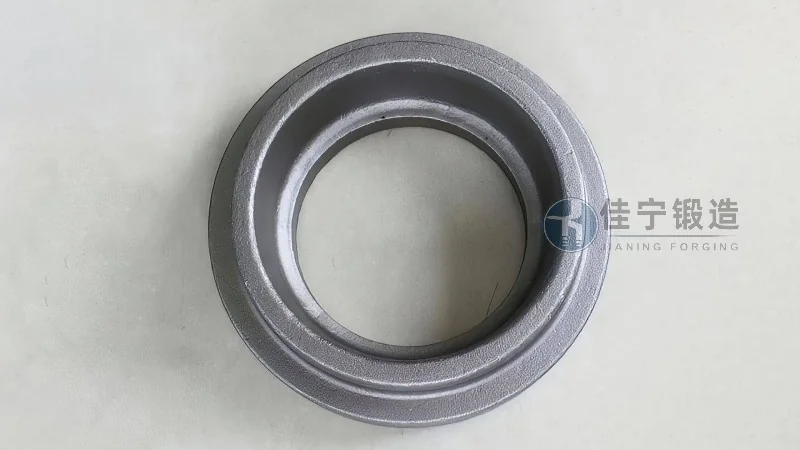
The traditional ring forgings procured by the plant have the following prominent difficulties:
1. Insufficient material density, making deformation difficult to control after heat treatment, resulting in increased machining allowance and a high defect rate;
2. Large fluctuations in forging grain size grades and unstable fatigue life; some batches experienced toroidal spalling within less than 2000 hours of operation after installation;
3. Suppliers have poor delivery flexibility and cannot meet the rapid production change needs of the construction machinery industry for small batches and multiple varieties;
4. The original process uses a free-forging billet + reaming scheme, with a material utilization rate of only about 65%, resulting in high costs.
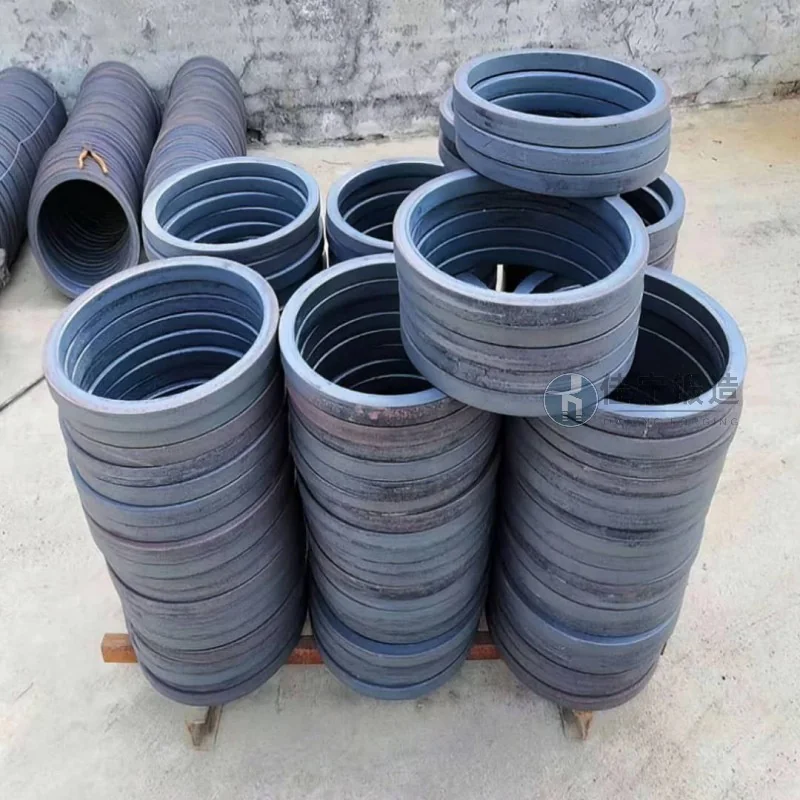
To address these pain points, Jianing Forging has tailored comprehensive solutions for precision ring forgings for customers:
1. Uses multi-directional closed ring grinding technology, allowing metal flow lines to be continuously distributed along the circumference, effectively eliminating internal looseness and segregation, and significantly increasing product density compared to traditional processes;
2. By optimizing heating specifications and deformation parameters, grain size is stably controlled within the fine grain range, combined with specialized stress-relief annealing, extending fatigue life by more than 40%;
3. Establish a fast-response production scheduling system to deliver commonly used ring forgings within 72 hours, and support drawing forging for non-standard dimensions;
4. With near-net forming technology, material utilization is increased to over 82%, while subsequent turning is reduced, resulting in a total cost reduction of about 18%.
This solution has been applied in batches on multiple mainstream models from the factory, with continuous supply for over three years without a single early failure complaint, helping customers reach new levels of overall machine reliability.